
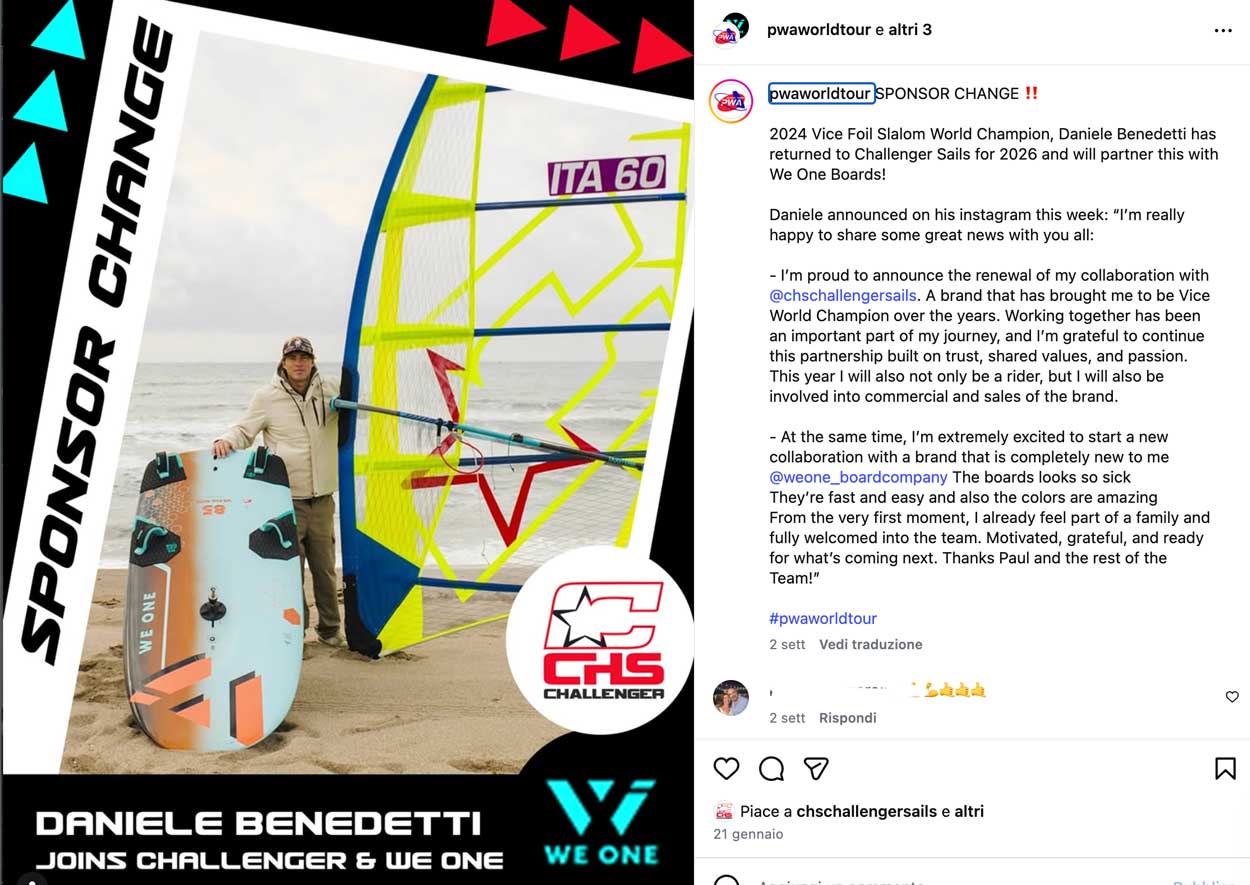
Daniele Benedetti Returns to CHS for 2026 – A New Chapter Begins
A Strong Return for 2026 CHS is proud to announce the renewal of its collaboration with Daniele Benedetti, 2024 Vice
Ask ten windsurfers what they check before a session and most will say downhaul, outhaul, boom height.
The leech? Almost never.
Yet the leech — the trailing edge running from the top down to the clew — is one of the main factors in how your sail actually performs.
Understanding it can change how you sail.
Not by a little. By a lot.
The leech directly influences three key elements of sail behaviour.
A leech that’s too open spills power before the sail can generate real drive.
If it’s too closed, airflow stalls.
The sail becomes heavy, gybes feel sticky, and acceleration disappears.
Finding the right balance is essential for efficient power delivery.
A well-tuned leech opens progressively when a gust hits, releasing pressure like a valve.
If it’s too tight, every gust transfers straight into your arms.
If it’s too loose, the sail loses power and speed the moment the wind drops.
The leech also determines how easily the sail rotates from one side to the other.
With the correct tension, the sail snaps through smoothly.
Too much tension and the rotation becomes slow and sticky.
Battens are your main tuning tool for controlling the leech.
Downhaul has an equally important role.
It doesn’t only load the luff.
It twists the top of the sail away from the wind, progressively opening the upper leech.
This behaviour is intentional — it’s how a sail depowers safely as the wind builds.
How smoothly this happens depends largely on how the sail was designed in the first place.
A few simple visual cues can tell you a lot about how your leech is working.
• Tip flutter at the very top of the leech is normal.
It means the sail is releasing pressure correctly.
• Flutter extending further down the leech usually indicates too much outhaul or insufficient batten tension.
• Batten inversion that refuses to rotate back often means the leech tension is too high for the conditions.
• Sail choking — when you’re clearly overpowered but more downhaul doesn’t help — often points to a leech that is holding tension when it should be releasing it.
The leech is not a passive part of the sail.
It is an active aerodynamic element, constantly adjusting how the sail handles power, gusts and rotation.
Learning how to read it makes you:
I’ve been designing sails with leech behaviour as a primary parameter for over 45 years.
It’s never an afterthought.
If you’d like to see how that translates into a real sail, take a look at the CHS range.
And if you have questions about setup, tuning, or choosing the right sail for your conditions — feel free to contact me directly.
I answer personally.
Claudio Badiali
CHS Wind Solutions
Browse the sails →
https://chswindsolutions.com/chs-shop
Email →
bad@chswindsolutions.com
A Strong Return for 2026 CHS is proud to announce the renewal of its collaboration with Daniele Benedetti, 2024 Vice
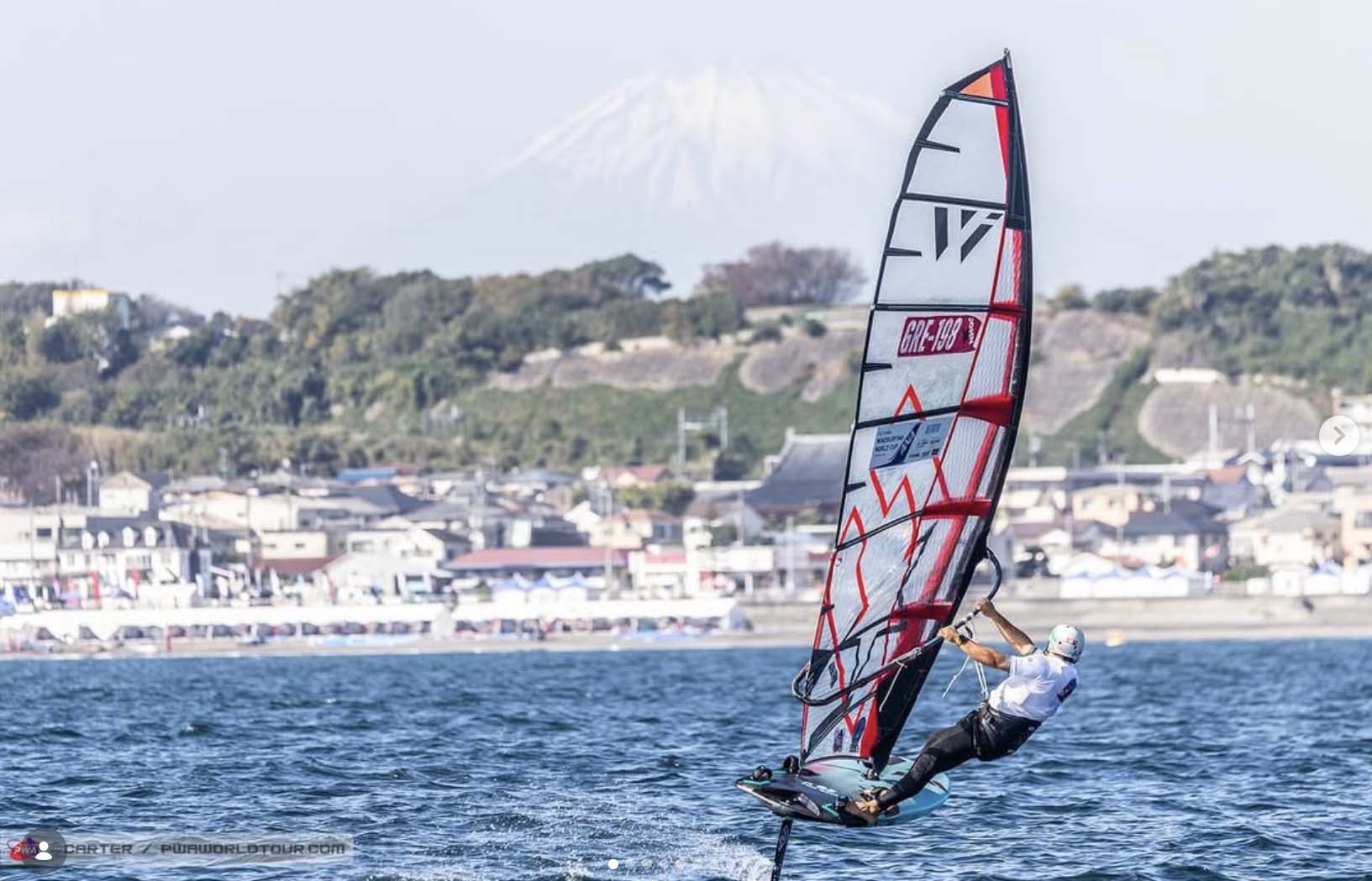
Final Stop: Japan 🇯🇵 The last PWA Foil event of 2025 has officially come to an end. Japan delivered demanding